The Cost Benefit of Modern Purpose-Built Applications
Software is getting cheap. High-quality, purpose-built applications are more accessible than ever - and the astronomical cost of legacy systems is on its way out.

Let's talk about the giant elephant in the sandbox: software is getting cheap. I know the obvious argument is, "You get what you pay for", but times are changing fast. High quality, purpose-built applications are more accessible than ever and the astronomical cost of legacy systems will soon be a thing of the past.
If you've ever tried to set up an electronic Quality Management System (eQMS) or a purpose-built application for a medical startup, you know the routine. You jump on a sales call, sit through a flashy demo, and then receive a quote that makes your jaw drop. $20,000 to $50,000 a year. Your company is a small fish amongst whales. When you go to a trade show, sales people look at your nametag and then go back to looking at their phone. And, while that might not be changing, the software world is.
For decades, legacy software enterprise gatekeepers have weaponized fear. They convince you that unless you pay five figures for their massive, clunky platforms, you will fail your ISO 13485 audit, get shredded by the FDA, and drown in a sea of non-conformances. They sell you on needing their platform for success and then lock you in for life.
Those days are over. There are fantastic applications emerging that bridge the gap between generic spreadsheets and legacy enterprise systems. Applications where you just pay month to month for what you need and can download all your data whenever you want.
The Spreadsheet Trap
Spreadsheets. If you're an engineer or project manager, I suspect your first thought is "put it in a spreadsheet". For the most part you love them, but sometimes your need grows beyond what is easily manageable. We all know why engineers resort to spreadsheets. Everyone already has them, is familiar with them, and they're highly customizable. But for design control documentation in the medical device world, manual spreadsheets quickly become a headache at best and a regulatory, and potentially, a product safety and quality risk.

ISO 14971 demands that every risk mitigation trace directly to a design requirement that is implemented and verified to be effective. If you have a small project and can track all the requirements, risk mitigations and verification tests in your head, lay down all the documentation in one clean round and make very few changes — simple spreadsheets might be fine. Most team's reality is far more complex and messy, and that's when moving beyond a spreadsheet really turns from a "Nice to have" to a "Must have".
Anyone who has spent three days buried deep in the cause and effects of minute, unlikely failure modes, not only begins to question their sanity, but what's the point of all this? What's the point of analyzing and documenting your design from every possible angle? It's two fold: 1) to help ensure success in developing a product that safely and effectively meets your user's needs, and 2) to help ensure smooth regulatory approval and continued audit readiness. Presenting an auditor a tangled web of independent documents with no clear and reliable mechanism linking all the elements together, is a quick way to trouble. But it doesn't have to be that way, and it doesn't have to cost you half a FTE.
The Next Generation of Productivity Apps
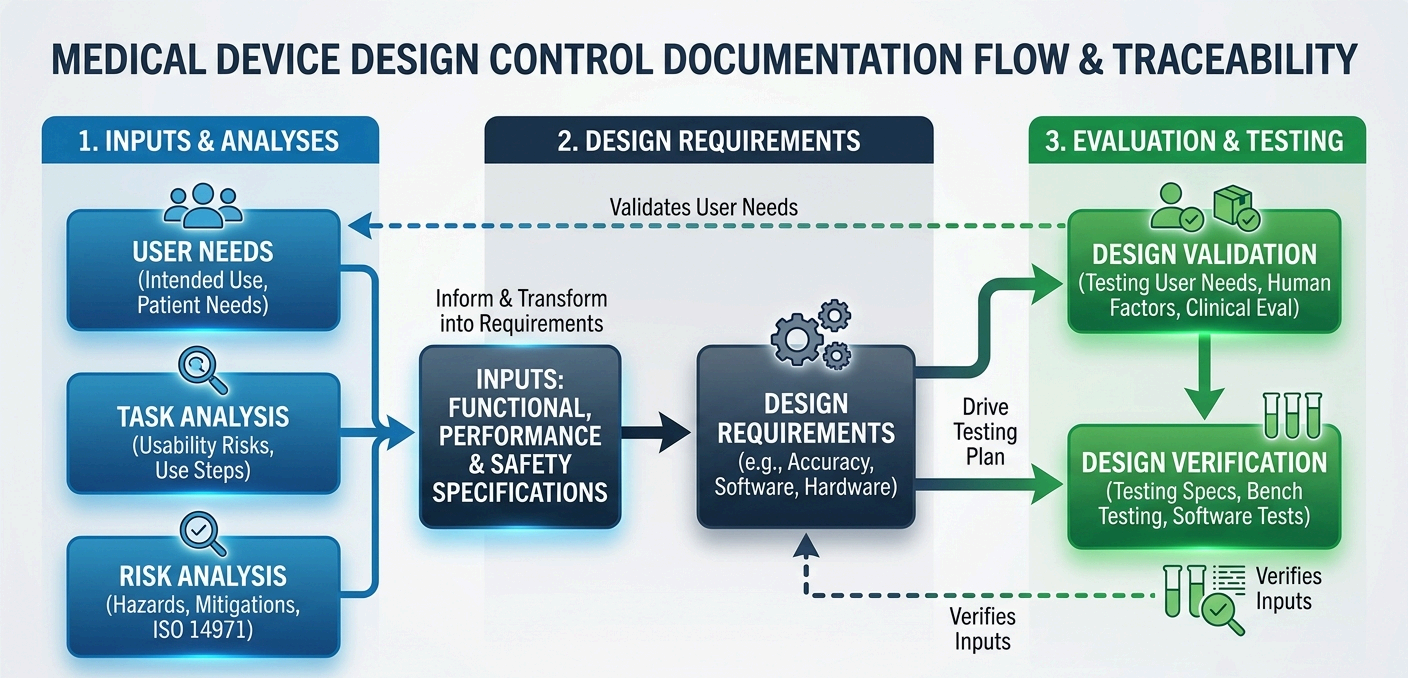
The modern software landscape has completely shifted. The gatekeepers are losing their grip and a new wave of purpose-driven productivity apps, accessible to teams of all sizes has emerged. For medical device teams, you can have requirements development, rigorous, bidirectional traceability and closed-loop risk management without the enterprise price. Take advantage of the productivity boost for a fraction of historical legacy costs.